
Moving into a new build in the Hills: protecting concrete, floors and your handover
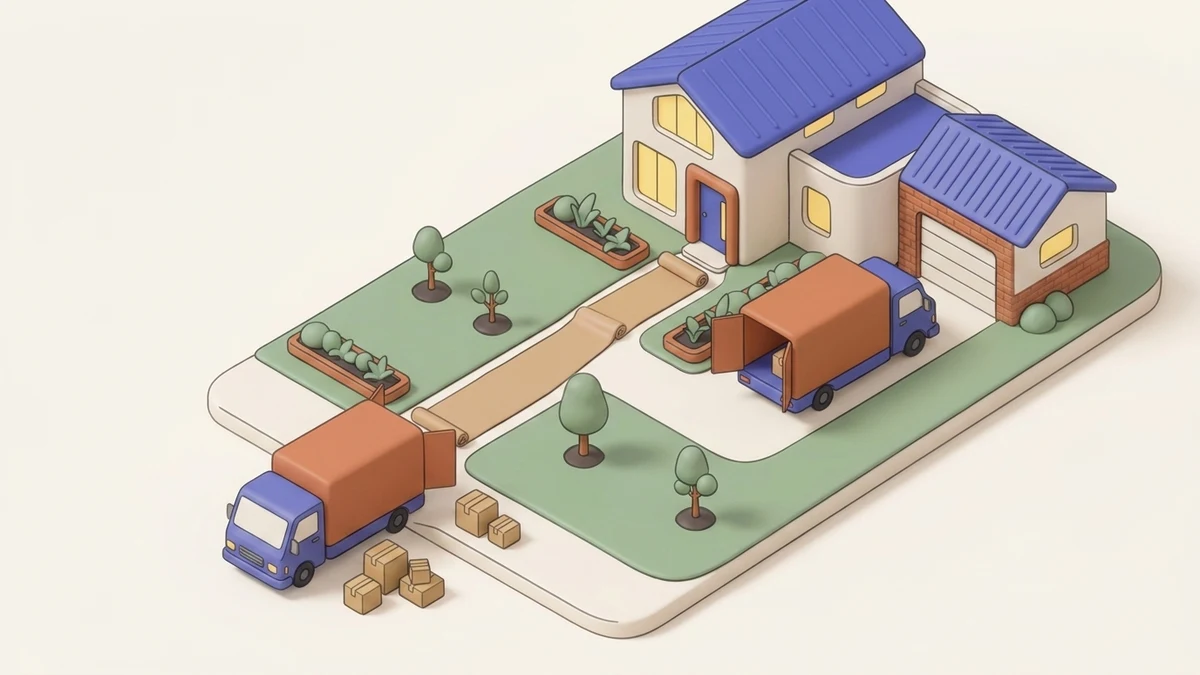
Moving into a brand-new home in the Hills is a different job to moving into an established one, and the difference is almost entirely about how new everything is. The driveway might be days old. The floors have never had a scratch. The estate might still have a builder’s compound at the entrance and a management company watching who drives in. And the date you’re actually allowed to pick up the keys can move on you right up to the last week.
If you’re settling into one of the new estates around Rouse Hill, North Kellyville, the Box Hill border or Beaumont Hills, here’s what’s worth thinking about before the truck turns up.
Green concrete: the driveway you can’t drive on yet
The most expensive mistake on a new-build move is cracking a driveway that was poured a fortnight ago.
Concrete doesn’t “set” and then it’s done. It cures over weeks, gaining most of its strength in the first month and keeping on gaining for a good while after. You can usually walk on a new driveway after a day or two, and drive a car on it after about a week, but a fully loaded removal truck is a completely different weight pressing through a much smaller contact patch. Builders routinely ask owners to keep heavy vehicles off fresh concrete for around 28 days for exactly this reason, and a crack from a truck is your problem, not the builder’s, once you’ve taken handover.
So the first question on a new-build move is simple: how old is the driveway? If it was poured well before settlement, it’s likely fine. If it went in just before handover, treat it as off-limits to the truck. The fix is easy once you know: we park on the street or the verge and carry the load in, or stage it with a smaller vehicle. It adds a bit of carry time, which we’ll tell you about up front, and it’s far cheaper than re-pouring a slab.
It’s worth the same thought at the other end too. If you’re moving out of a place where the driveway or paths are newish, or the front lawn has just been laid, the same care applies.
New floors: protect the run before anything moves
In an established home the floors have already lived a life. In a new build, the first thing to cross that timber, hybrid or new carpet shouldn’t be a fridge trolley with grit on the wheels.
Protecting new flooring is straightforward when it’s planned. We lay hard floor protection or adhesive film along the actual path the load will travel, pad the doorframes and corners on that route, and keep the dirty work, anything with wheels or sharp feet, on the protection rather than the bare floor. New stairs get the same treatment. The aim is that the home looks exactly as untouched after the move as it did at handover.
A couple of things help us help you. Have the floors swept or vacuumed before we start, because grit underfoot is what scratches new boards. And if there’s a particular area the builder has flagged as still curing or settling, point it out so we route around it.
Estate covenants and heavy-vehicle rules
Newer Hills estates often come with more rules than an established street, and they’re easy to miss in the excitement of a new home.
Many estates around Rouse Hill, North Kellyville and the Box Hill release have covenants and an estate management plan that cover things like where heavy vehicles can park and turn, keeping mud and debris off the estate roads, and occasionally the hours when work, including a move, can take place. Some still have active construction nearby, which means shared access, temporary fencing, or a single way in and out that a big truck has to negotiate.
None of this stops your move. It just rewards a five-minute read of the estate documents beforehand, so the truck arrives knowing where it can go. If you can tell us the estate’s rules when you book, we’ll plan the access around them rather than discovering them at the gate.
The settlement gap: when the build runs late
Handovers slip. A build that was meant to be ready at the end of the month isn’t, and suddenly you’ve got a lease ending or a sale settling on one date and no finished home to move into on the other.
This is one of the most common situations on a new-build move, and there’s a normal answer for it: move-store-move. We move you out of your current place on the date you have to be out, hold your belongings in secure storage for as long as you need, and then deliver into the new home once the keys are genuinely in your hand. It means handling your things twice, so it costs more than a single direct move, but it takes the pressure off a date you don’t fully control.
If there’s any chance your handover might move, it’s worth raising it when you book rather than the week before. Knowing it’s a possibility lets us hold flexibility in the plan instead of scrambling.
How a Hills new-build move usually runs
Put together, a smooth new-build move in the Hills looks like this. We confirm the age of the driveway and decide whether the truck can use it or needs to stay on the road. We lay floor protection along the carry path at the new home. We work within the estate’s heavy-vehicle and access rules. And if the dates are uncertain, we plan for a possible store-in-between rather than betting on a handover that might move.
Our online-quote rates start at $200 an hour for two movers and a truck, $250 for three movers, and $400 for a four-mover, two-truck crew, billed hourly from arrival to finish, with a clear estimate up front. A new-build move sometimes takes a little longer because of the carry-from-the-road and the floor protection, and we’d rather tell you that honestly when we quote than surprise you on the day.
Moving into a new home in Rouse Hill, North Kellyville, Box Hill or Beaumont Hills? Get a free, no-obligation quote and we’ll plan the driveway, the floors and the dates with you.
Common questions
Can a removal truck drive on a brand-new concrete driveway?
Not straight away. Fresh concrete keeps gaining strength for weeks. It's walkable in a couple of days but a fully loaded removal truck is a different load entirely, and most builders ask you to keep heavy vehicles off new concrete for around 28 days. If your driveway is only days old, tell us, and we'll park on the road or the verge and carry in rather than risk cracking it.
How do you protect new flooring during a move into a Hills new build?
We lay protection over the run we'll be using, hard floor coverings or carpet protection film over carpet and new timber or hybrid, plus corner and doorframe padding. New-build floors haven't taken a single knock yet, so the goal is that they still haven't after we leave.
What are estate covenants and do they affect my move?
Many newer Hills estates around Rouse Hill, North Kellyville and Box Hill have covenants and an estate management plan that set rules for heavy vehicles, where they can park, mud on the road, and sometimes the hours work can happen. They're worth a quick read before move day so the truck doesn't get turned around at the gate.
What happens if my new build isn't finished in time for my move?
It's common for a handover to slip. If your current place has to be vacated before the new one is ready, the usual answer is a move-store-move: we move you out, hold your belongings in secure storage, and deliver into the new home once you've got the keys. It costs more than a single move, but it beats being caught with nowhere for your furniture to go.
Planning a move?
Get a free, no-obligation quote and we'll plan the access at both ends with you.
Get a quote